High protein pork stir fry
A lean, high protein pork stir fry with hoisin sauce, rice vermicelli, and frozen veg. ~650 kcal and 54g protein per portion.

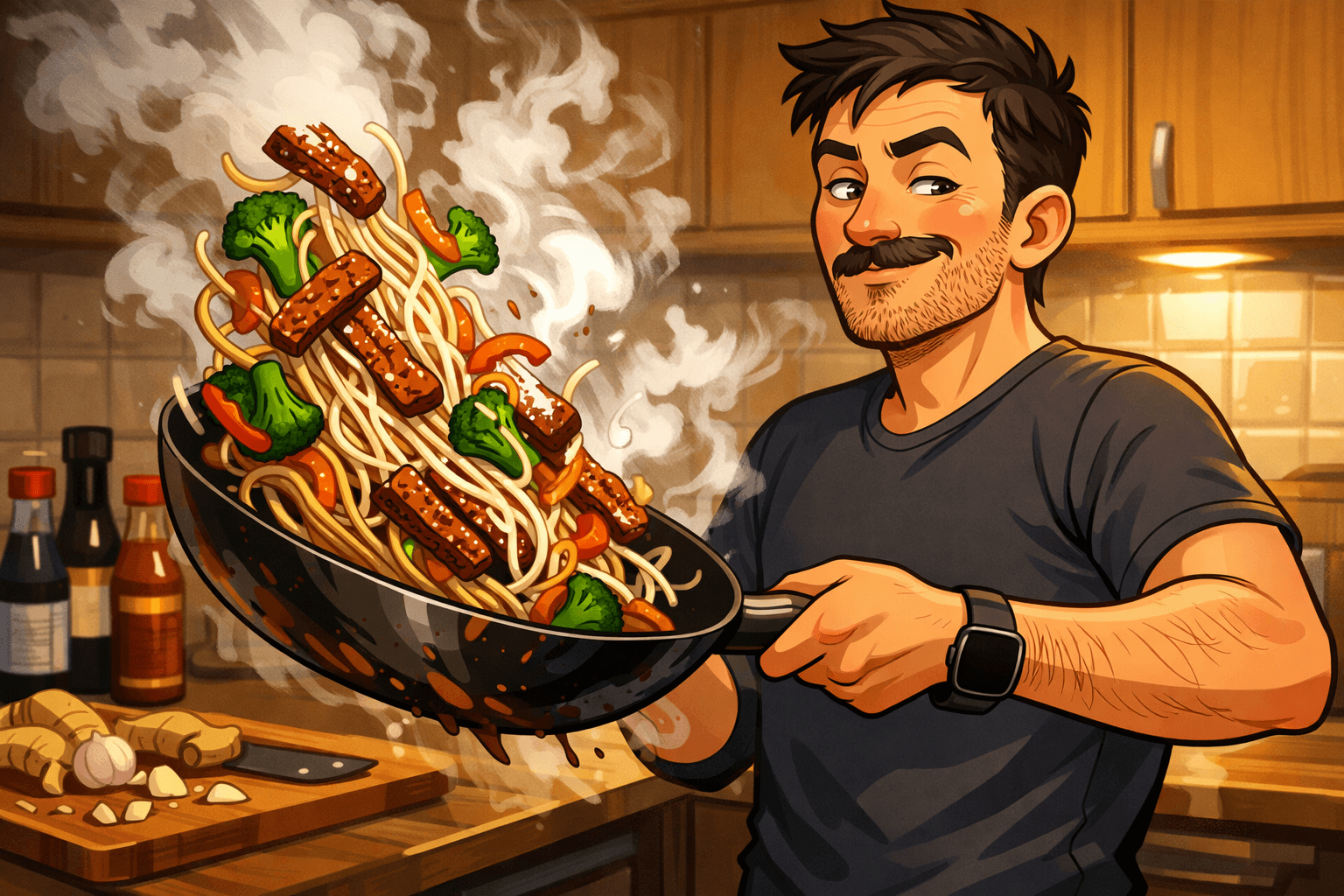
Most high-protein weeknight meals involve some combination of chicken breast, mild despair, and a vague promise to make it more interesting next time. This pork stir fry with hoisin sauce is a breath of fresh air and has enough protein per portion to help you reach your targets.
The key is to use pork tenderloin which is very low in fat, and usually cheaper than pre-stripped pork.
Makes: 2 portions | Time: ~25 minutes
Nutrition (per portion, serves 2)
648 KCAL | 54P | 68C | 11F
Ingredients
- Pork tenderloin, cut into strips — 400g
- Frozen stir fry vegetables — 500g
- Rice vermicelli noodles (dry weight) — 90g
- Hoisin sauce — 3 tbsp
- Soy sauce — 2 tbsp
- Rice vinegar (or any mild vinegar) — 1 tbsp
- Sesame oil — 1 tsp
- Garlic cloves, minced — 3
- Fresh or jarred ginger, minced — 1 tbsp
- Cooking spray or neutral oil — a few sprays / ½ tsp
Method
- Mix the sauce. Combine the hoisin, soy sauce, rice vinegar, and sesame oil in a small bowl. Set aside before you turn on the heat — a stir fry moves quickly once it starts.
- Soak the vermicelli. Place the dry noodles in a large bowl and cover with boiling water. Soak for 3–5 minutes until just tender but still with a little bite. Drain, rinse with cold water, and toss with a tiny amount of oil to prevent clumping. Set aside.
- Sear the pork. Spray a wok or large frying pan with cooking spray (or add ½ tsp neutral oil) and heat over high heat until smoking. Add the pork strips in a single layer and leave them — no stirring — for 90 seconds to 2 minutes until coloured underneath. Toss briefly, then remove to a plate. Pork tenderloin cooks fast and dries out faster; don't overcrowd the pan or it'll steam instead of sear.
- Cook the veg. Add the frozen vegetables straight from the freezer — shake off any large ice crystals first. Stir fry on high heat for 3–5 minutes until tender and any moisture has evaporated. Keep the heat high: water in the pan dilutes the sauce.
- Fry the aromatics. Push the veg to one side. Add a small spray of oil to the cleared section, then add the garlic and ginger. Fry for 30 seconds, pressing lightly so they make contact with the pan, you want it to be golden and fragrant.
- Combine and finish. Return the pork to the wok. Pour the sauce over everything and toss to coat. Add the vermicelli and toss quickly for 1 minute until glossy and heated through. If it looks tight or the noodles are clumping, add 1–2 tbsp of water. Serve immediately.
FAQ
Is this good as a post-run recovery meal?
Yes. The carbohydrate supports glycogen replenishment and 54g of protein sits well above the 20–40g threshold identified as effective for stimulating muscle protein synthesis post-exercise.
Can I use a different protein?
Chicken breast works and keeps the macros almost identical. Prawns are leaner still and cook in under two minutes. Tofu is a reasonable swap if pressed well first; the protein content is significantly lower (~8g per 100g), so the high-protein framing no longer applies unless you increase the quantity considerably.
My sauce still tasted flat. What else can I do?
First, was the garlic and ginger properly fried rather than just added to the sauce? Because we’ve all been guilty of shortcuts, and this one makes a huge difference to flavour. Second, half a teaspoon of fish sauce added to the sauce mix amplifies umami, and a splash of soy sauce when serving can also make wonders.
Can I batch this?
Partially. The sauce and cooked pork both keep well for 3–4 days. Vermicelli doesn't — it absorbs liquid continuously and turns to mush overnight.
Does this count as carb loading?
Not really — the fibre in the veg makes it a poor choice immediately before a long run. As a meal in the 24–48 hours before a big session it's fine, but if you're actively topping up glycogen, the principles of carb loading point toward simpler, lower-fibre sources closer to race day.
Why does this come in under 700 kcal when most stir fries are much higher?
Most restaurant stir fries use 2–4 tablespoons of oil and a higher sauce ratio. At home with spray oil and measured quantities, the fat drops considerably. The pork cut also matters: tenderloin rather than shoulder saves around 100 kcal per 100g from fat alone.