How not to carb load
Carb loading sounds simple. In reality it can be a minefield of panic eating, fibre mistakes, and digestive regret.

Carb loading is one of those things runners talk about with absolute confidence, despite most of us getting it wrong at least once per training cycle.
On paper, it’s straightforward. Eat more carbohydrates so your muscles store more glycogen, which is the form of carbohydrate your body uses for endurance exercise. More glycogen means more energy. More energy means better running.
This is not a guide on how to carb load correctly. These are mistakes I have learned the hard way.
Turn carb loading into fat loading
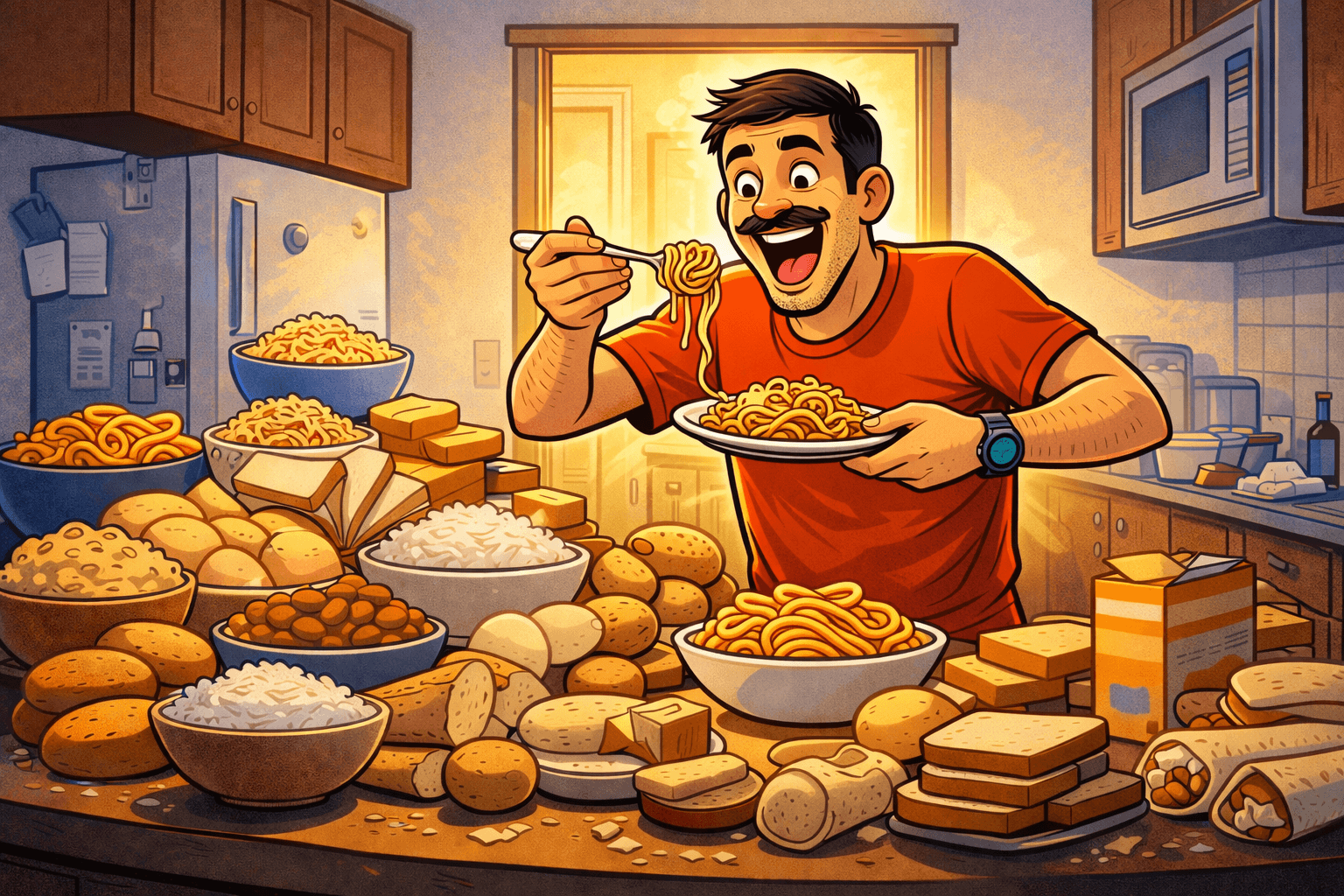
At some point, runners stop asking “how many carbs is this?” and start asking “does this count?” Pasta counts. Pizza counts. Anything beige, heavy, and served in a bowl counts. The presence of carbohydrates becomes a moral clearance rather than a calculation.
A plate of pasta is not automatically a carb-focused meal. Add oil, cheese, cream, bacon, or sausage and you’ve dramatically changed how that meal behaves in your body.
The problem is not that fat is bad. The problem is timing. Fat slows digestion, keeps food in the stomach longer, delays absorption, and increases the chance that when you start running, your gut is still actively processing last night’s dinner.
Forgetting that fibre exists
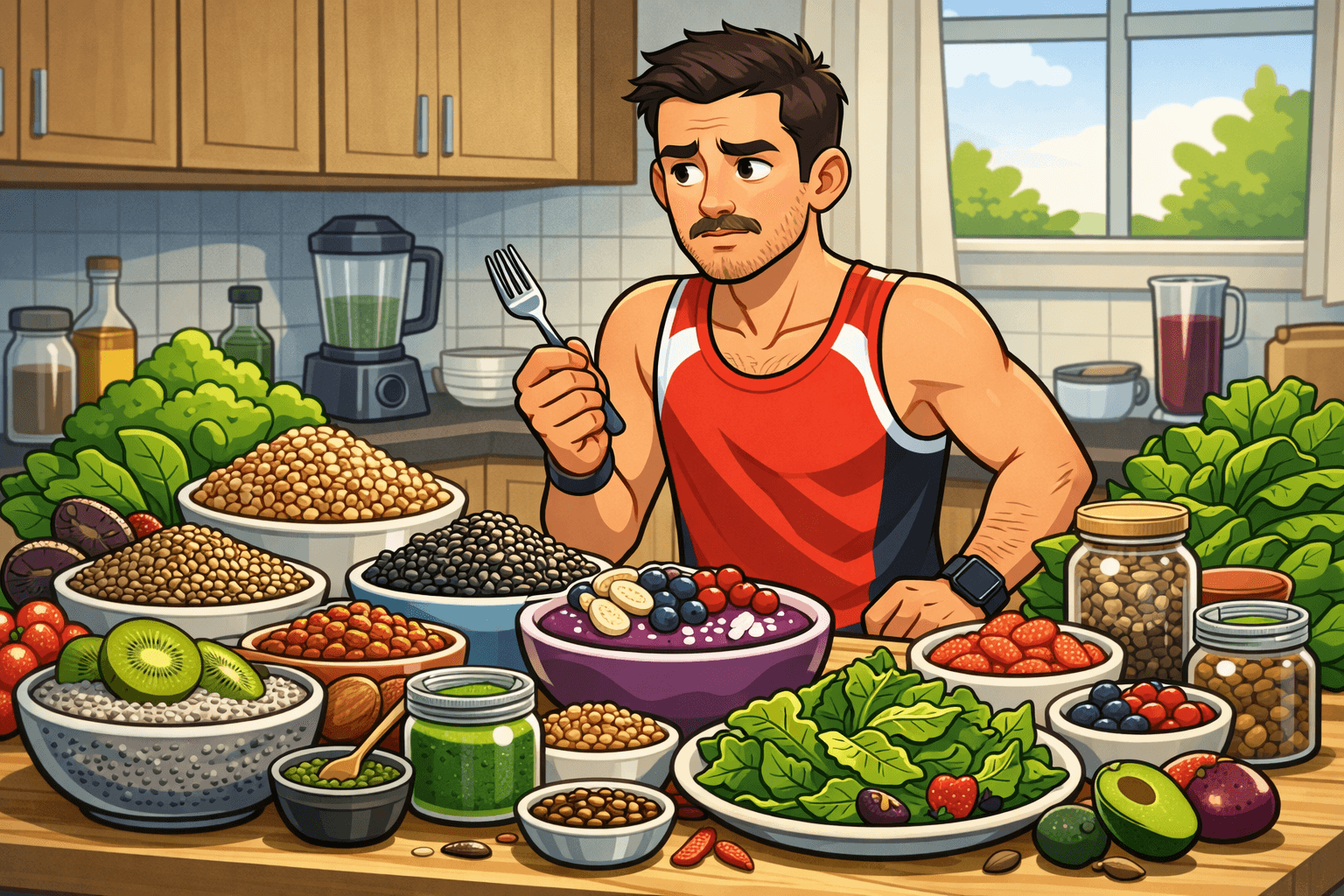
In an effort to “eat clean”, runners often carb load with foods that are technically carbohydrates, but also extremely high in fibre. Oats. Lentils. Beans. Ancient grains with backstories.
Fibre slows digestion and increases gut activity. Combine that with pre-race nerves and physical jostling, and you’ve created an environment where your stomach becomes emotionally unpredictable.
Fibre is great for long-term health. It is less great when you are about to run for several hours and would prefer your digestive system to remain quiet and respectful.
Turning carb loading into panic eating
You plan meals. You feel organised. Then someone mentions “glycogen supercompensation” and suddenly you’re eating toast because it exists and time is running out. This usually happens late in the evening. You are no longer hungry, but you are motivated.
Eating feels like something you can do to improve performance, so you keep doing it, long past the point where it’s helpful. The result is going to bed uncomfortably full, sleeping badly, and waking up unsure whether you’re fuelled or just full of regret.
Starting too early and not knowing when to stop
Another classic mistake is carb loading like you’re stocking up for winter. You start four or five days out, gradually increasing portion sizes, stacking meals on top of meals, convinced that more days equals more benefit.
In reality, most recreational runners don’t need an extended carb loading phase. Glycogen stores can be topped up in a relatively short window, especially if training volume has already dropped. What usually happens instead is several days of overeating, mild weight gain, and a growing sense that your clothes have turned against you.
Confusing discomfort with preparedness
A properly fuelled runner does not feel stuffed. They feel normal. Boring, even. Carb loading done well is underwhelming.
If you feel uncomfortable, bloated, or sluggish before a run, you may interpret this as proof that you have “done it right”. You have not. You have just eaten too much, too quickly, with too much fibre, under mild emotional stress.
What carb loading is actually meant to feel like
This is the unsexy truth: carb loading is not a feast of your favourite foods. It is not dramatic. It is a small, deliberate increase in carbohydrate intake, paired with reduced training load, chosen from foods you already know your stomach tolerates.
Most runners don’t mess up carb loading because they don’t care. They mess it up because they care too much. They panic, overthink, and confuse fullness with readiness and fibre with virtue. If your carb loading plan ends with you lying in bed thinking about your stomach, you have misunderstood the assignment.
Eat enough. Eat simply. Then stop.