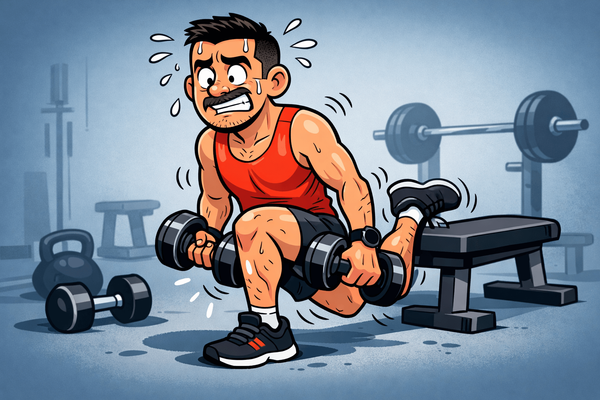
Should I run with a cold?
Mild sniffle or actual illness? Here’s how to decide whether to run with a cold without being reckless.

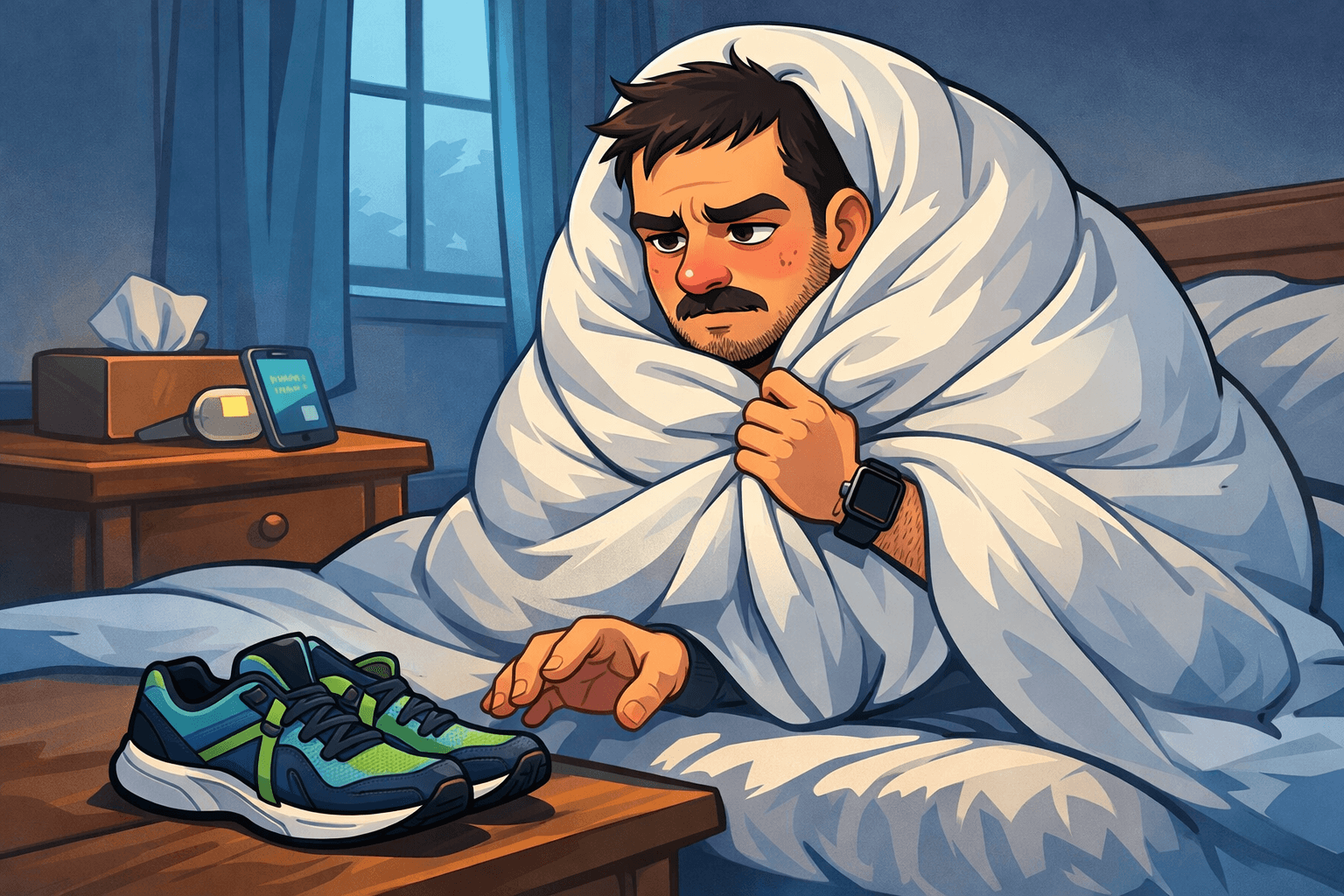
There is a very specific kind of self-diagnosis that happens at 6am when your throat feels suspicious and you have intervals planned. The answer depends less on the virus and more on your honesty.
The two mistakes runners make when they have a cold
Before we get into immune systems and sensible guidelines, let’s address the real issue: behaviour.
Using a sniffle as a cancellation policy
You feel slightly congested, energy is average. Nothing dramatic, but the idea of hill reps feels deeply offensive. In this case, you probably should run.
When you start moving, blood flow increases, your body temperature rises, and stiffness often reduces. When you’re moving and breathing harder, circulation improves and the swelling inside your nose reduces slightly. Once you’re warm, you usually feel better than you did under the duvet.
Just commit to the first kilometre. Tell yourself you can stop after that if it feels genuinely worse, or you’re having a terrible time. No drama. Most of the time, you’ll realise you were resistant, not incapable.
Protecting the plan at all costs
This is the opposite problem: you feel genuinely run down. Achy, sleep is interrupted and your resting heart rate is through the roof. But you’re afraid that missing one session will unravel months of work.
In this case, you probably definitely should not run.
When you have a cold, your body diverts energy toward fighting infection. You feel tired because it is doing actual work internally. That heavy, foggy feeling is literally your body telling you to stop what you’re doing so it can focus on fighting the infection.
Even an easy run causes muscle fibre stress and depletes glycogen, which is stored carbohydrate in your muscles. Recovery requires energy, sleep, and protein: if your body is already busy fighting a virus, adding hard training can delay recovery from both the run and the illness.
Remember that fitness does not evaporate in 48 hours. Prolonged illness can.
What actually happens in your body when you have a cold?
When you are ill, your body is slightly inflamed. You may have a higher resting heart rate and sleep worse, your appetite can change and coordination can be subtly off.
Now add a hard session: heart rate rises further, stress hormones increase and muscle tissue experiences micro-damage that needs repair. In a healthy state, that stress builds fitness. In a sick state, it mostly builds fatigue.
Your recovery budget is not unlimite - when part of it is being spent on fighting infection, there is less available for adaptation. This is why hard training while sick often means you recover more slowly from the cold, more slowly from the session, and spend the next week feeling slightly below par without ever quite knowing why.
Does running with a cold boost your immune system?
Regular moderate exercise is associated with improved immune function over time. People who move consistently tend to get fewer upper respiratory infections overall, but that does not mean hard exercise while actively sick speeds up recovery.
High-intensity training temporarily increases stress hormones such as cortisol. In normal circumstances that is part of adaptation, but during illness, it can suppress aspects of immune function for several hours. This is sometimes referred to as the “open window” effect.
So: easy, short, conversational run with mild symptoms? Usually fine for most healthy adults. Long, intense, ego-driven session while symptomatic? Not the immune hack you think it is.
Will running clear your sinuses?
Yes. Briefly.
When you run, you breathe more deeply and more frequently. Increased airflow and circulation can reduce nasal congestion temporarily. But this is symptom relief, not viral destruction: once you stop and cool down, the congestion often returns.
If you’re running purely for sinus clearance, you are essentially using a 10 km jog as a decongestant. Which is a lifestyle choice. No judgment here.
Does running help mentally when you’re ill?
Often, yes. Exercise increases endorphins, which reduce pain perception, and neurotransmitters like dopamine and serotonin, which influence mood and motivation. When you feel mildly ill and slightly sorry for yourself, a short run can restore a sense of control. That psychological lift can be really valuable.
The above-the-neck rule explained properly
If your symptoms are limited to a runny nose, mild sore throat and nasal congestion, and you have no fever, no chest tightness, no widespread body aches, then easy exercise is generally considered safe for most otherwise healthy people.
Easy means conversational pace, so you shouldn’t be going for speedwork or aim for a PB, even if that is in your training plan.
If your symptoms include fever, deep chest cough, chest tightness, muscle aches or dizziness, then you rest.
Fever increases heart rate and metabolic demand at rest, meaning your cardiovascular system is already working harder than normal. Adding exercise increases that strain further, which is an unnecessary load on your heart and recovery systems.
So should you run with a cold?
Ask yourself: are you physically incapable, or just unmotivated?
If symptoms are mild and above the neck, test it with an easy, short run. Give yourself permission to stop early.
If you feel genuinely run down, heavy, feverish, or chesty: take a rest day. Missing one run will not ruin your fitness, but forcing a run while ill might.