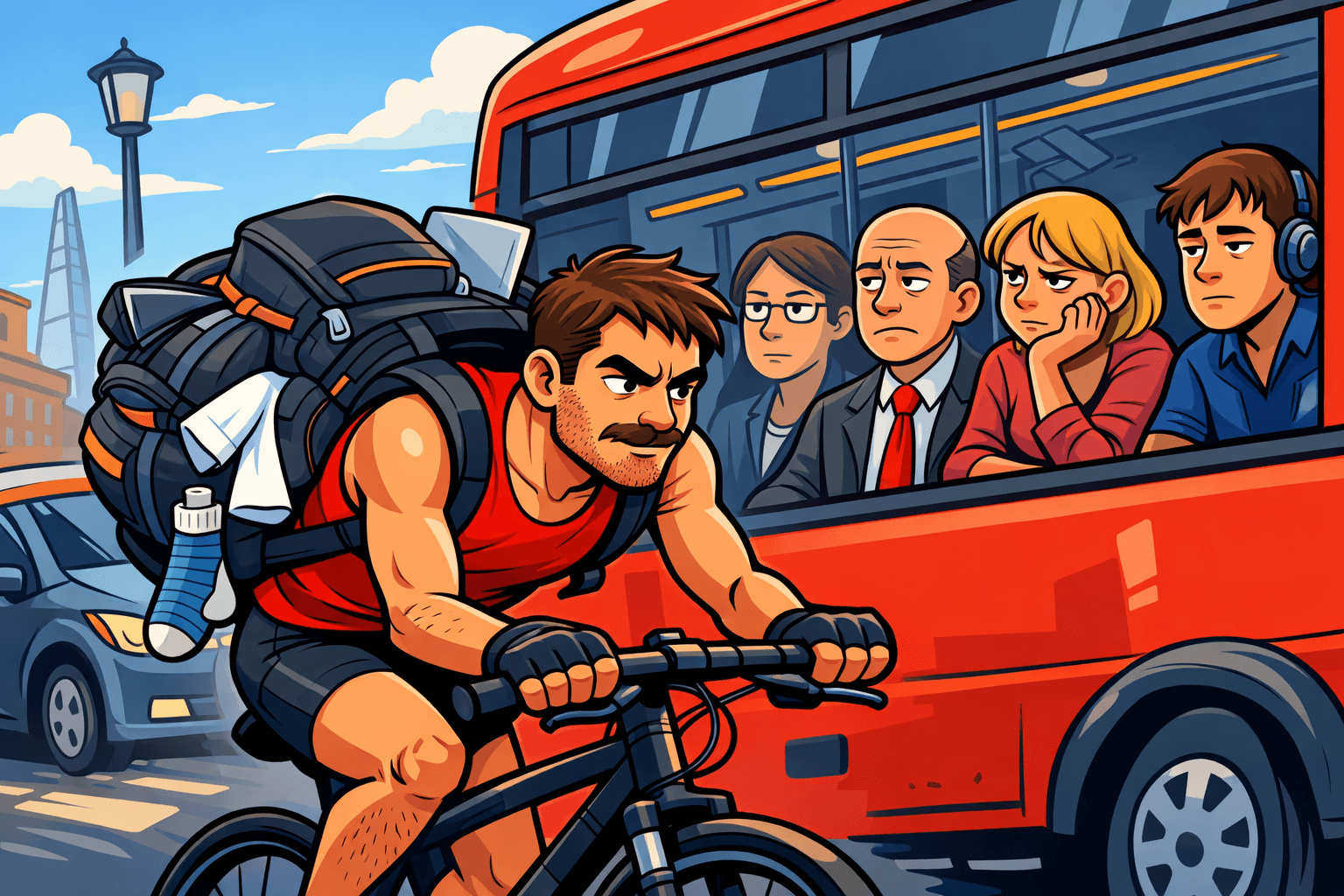
Why runners are always hungry, and why you should just accept it
You ran 10k, you've eaten twice but you're still hungry. Here's why that's completely normal, and what your body is actually asking for.

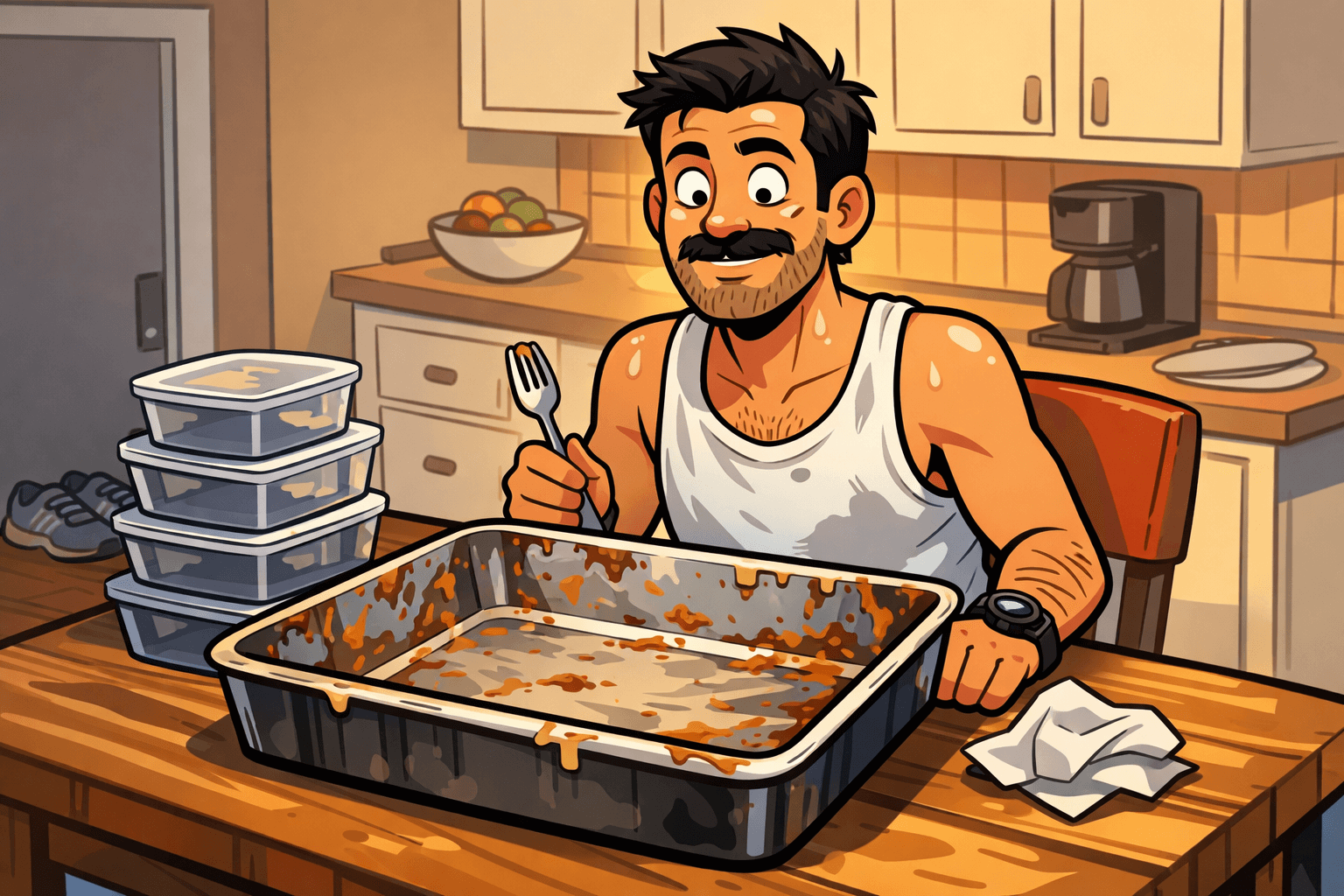
At some point during a heavy training block, you may find yourself meal prep a lasagne, perfectly balanced for your macros and portioned out for the week. You might look at it with genuine pride. And then you will eat all of it in one sitting, stare at the empty containers, and start wondering what else is in the fridge.
This is not a sign that you are doing something wrong. It is your body doing exactly what it is supposed to do, just louder and more aggressively than you were expecting.
Runner hunger is real, it is physiologically justified, and it is frequently misunderstood - particularly by runners who are also trying to manage their weight, which creates a conflict so uncomfortable that most people just eat the lasagne and feel guilty about it afterwards. When in fact, what you should feel guilty about is starving your body to the point where it makes you inhale a giant lasagne like it was a small snack.
Why running makes you so much hungrier than other exercise
Running burns a significant number of calories - more per hour than most other forms of exercise, because it is weight-bearing and involves moving your entire body mass continuously through space. A 75kg runner covering 10k burns somewhere in the region of 600-700 calories, depending on pace, terrain, and individual efficiency. Do that five times a week and you have created a substantial energy deficit that your body will notice and respond to, loudly and repeatedly, until you address it.
When your energy stores drop, your body releases ghrelin, sometimes called the hunger hormone, which signals to your brain that it needs fuel. Running, particularly at higher intensities or longer durations, suppresses ghrelin temporarily during the effort itself (which is why you often don't feel hungry mid-run or immediately after), but triggers a significant rebound effect in the hours that follow.
That delayed spike is the one that catches most runners off guard. The run felt manageable and recovery went fine. Then you wake up the next day, eat a first and second breakfast and still feel like something is missing.
The day-after hunger spike: why it hits 24 hours later
During a long run, your body depletes its glycogen stores - the form of carbohydrate stored in your muscles and liver that fuels endurance exercise. Your body doesn't just want to replace what it used; it wants to supercompensate, storing slightly more than before in anticipation of future demands.
This is also why carb loading before a marathon works - the body is primed to store glycogen aggressively when it has been depleted. The day-after hunger is the same mechanism operating in reverse: your muscles are essentially putting in a large order and waiting for delivery.
The practical implication is that trying to ignore the day-after hunger is both unpleasant and counterproductive. Your muscles are actively rebuilding and feeding them is not a failure of discipline.
Why you're not hungry right after a run
The immediate post-run appetite suppression is one of running's more inconvenient physiological quirks. During exercise, blood is redirected away from the digestive system toward the working muscles. At the same time, adrenaline and other stress hormones suppress appetite as part of the fight-or-flight response that hard exercise mimics. The result is that immediately post-run, food is often the last thing on your mind.
The problem is that this window is exactly when your body most needs nutrients. The 30 to 60 minutes after a run is when muscle protein synthesis - the process of repairing and building muscle tissue - is most active, and when glycogen replenishment is most efficient. Skipping this window because you're not hungry and then eating a large meal three hours later is less effective for recovery, even if the total calorie intake is the same.
The runners who consistently under-fuel in this window are also the ones who consistently wonder why they have a migraine by mid-afternoon. Hunger suppression after a run is not the same as not needing fuel. It is just your body's timing being unhelpfully out of sync with your recovery needs.
Why you're craving junk food after a long run
There is a specific kind of post-run craving that bypasses anything sensible and goes directly to salt, fat, and sugar. A bag of crisps, a burger, something with no nutritional redemption whatsoever. This is not your character failing you: it is your body being quite specific about what it actually needs.
Salt cravings after running are a direct response to sodium lost through sweat. Longer runs in warm conditions can deplete sodium significantly, and the body's response is to want it back urgently and in quantity. Fat and sugar cravings follow a similar logic - dense, fast-energy foods that can replenish glycogen and provide the caloric density your body knows it needs after significant expenditure.
The body is not sophisticated enough to want a quinoa bowl with a side of electrolyte drink. In practice, this often means your post-long-run meal plan goes straight out the window in favour of whatever requires the least preparation and delivers the most immediate satisfaction. Which is perfectly fine, within reason. Your muscles need fuel and they are not fussy about the packaging.
Why you can eat more than usual and still lose weight
One of the more disorienting experiences of a heavy training block is eating substantially more than normal and still finding that the scales haven't moved, or you might even have lost weight.
The energy expenditure of serious running is simply higher than most people intuitively account for. A marathon training block at moderate volume, say, 50 to 60 kilometres per week, can add 3,000 to 4,000 extra calories of expenditure per week on top of your baseline. That is an enormous deficit to fill, and most runners do not fill it, partly because appetite regulation lags behind expenditure, and partly because eating that much feels excessive even when it isn't.
Runners in heavy training blocks are frequently under-fuelled without knowing it. They're eating more than usual, so it feels like enough, but 'more than usual' and 'enough' are not the same number. Chronic under-fuelling in training leads to fatigue, poor recovery, increased injury risk, and -- in a cruel twist -- performance that doesn't improve despite the training load.
The post-marathon hunger is a different beast entirely
Race day hunger follows its own peculiar logic. During a marathon, appetite is suppressed almost entirely by adrenaline and effort. Cross the finish line, collect the medal, you feel nothing resembling hunger for a surprisingly long time. And then, the adrenaline clears and the body presents its invoice.
Post-marathon hunger operates at a scale that surprises even experienced runners. One enormous breakfast at a diner is a reasonable start. A second breakfast at a different establishment is not as unreasonable as it sounds. Lunch shortly after is practically mandatory. The body has just spent several hours burning through every available fuel source and it wants all of it back, immediately, in whatever form is most convenient.
This is one of the few occasions where there is genuinely no such thing as eating too much. The energy debt is real and substantial.
What to actually do about runner hunger
The main mistake runners make with hunger is treating it as a problem to be managed rather than a signal to be acted on. Trying to suppress runner hunger through willpower during a heavy training block is both miserable and counterproductive. Your body is telling you something accurate. The better approach is to make it easier to respond to.
Eat more carbohydrates, not just more food.
Adding more protein and fat is useful, but if you're not replacing the carbohydrate your training burns, the hunger will persist regardless of total calorie intake. Rice, pasta, potatoes, bread -- the unglamorous stuff that the clean eating movement has spent a decade making runners feel guilty about -- are exactly what a heavy training block requires.
Eat something within 30 to 60 minutes of finishing a run, even if you're not hungry.
A banana, a recovery shake, a bowl of cereal – anything with carbohydrate and protein. You are not hungry yet, but you will be, and the window for efficient glycogen replenishment closes quickly. This also reduces the chance of the migraine-by-afternoon situation that comes from running on empty and then forgetting to refuel.
Expect to be hungrier the day after long runs
Plan for it and have food available. Do not meal prep five days of lunches and put them all in one container.
Stop trying to eat less
If you are training seriously and also trying to reduce calorie intake, you are working against yourself. The hunger is not a side effect to be managed, it is your body asking for the fuel it needs to absorb the training.