
Eating clean but training feels worse? Here’s why
Eating clean feels healthy, but it can lead to low energy, poor recovery, and worse performance.

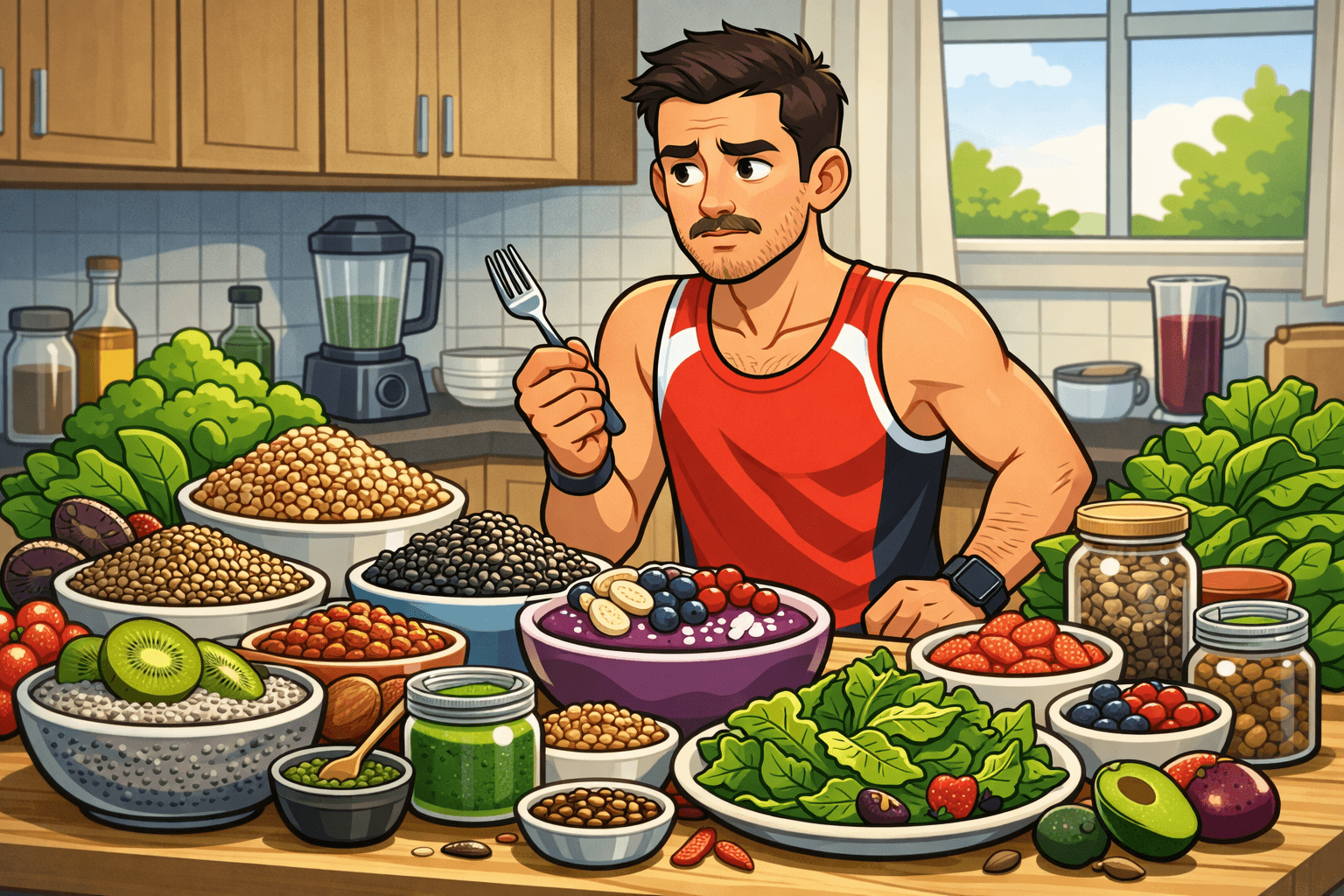
At some point during training, a lot of people clean up their diet. Fewer processed foods. More whole ingredients. Better choices. It feels sensible, adult, and disciplined.
And then training starts to feel worse. Not obviously broken, just heavier flatter, like every session costs a bit more than it used to. You are doing everything “right”, so the assumption is that the problem must be you.
This is where eating clean turns from a health choice into a performance problem.
What does “eating clean” actually mean?
Clean eating is rarely a specific plan, but more of a belief system.
It usually revolves around removing processed foods, chasing the latest “superfoods”, and placing enormous value on micronutrients. Chia seeds. Buckwheat. Seaweed. Açai berries. Foods that sound impressive and come with a health story attached.
None of this food is bad, but a diet can be extremely nutritious and still be wildly unbalanced. Clean eating is often less about what your training needs and more about what feels virtuous to put on a plate.
The focus shifts toward vitamins, minerals, antioxidants, and fibre, often at the expense of basic energy balance. That is where the disconnect starts.
Micronutrients vs macronutrients in training
Micronutrients are the small things your body needs in small amounts. Vitamins and minerals that support long-term health, immune function, and general wellbeing. Clean eating tends to do very well here. Plates look colourful. Ingredients sound impressive. Everything feels “good for you”.
Macronutrients are different. They are the parts of food that provide energy and structure: carbohydrates, protein, and fat. These are what determine whether you actually have fuel available to train, whether your muscles can recover afterwards, and whether fatigue builds up or clears.
Both micronutrients and macronutrients matter, but they do very different jobs.
Clean eating often prioritises micronutrients because they are easier to label as healthy, easier to moralise, and easier to sell. Macronutrients are less glamorous. They are practical, boring, and harder to turn into an identity.
The problem is that training runs on macronutrients. You can eat a diet that is rich in vitamins and minerals and still struggle to train well if your macronutrients are out of balance. In that situation, it might not look obviously wrong on paper, but performance deteriorates anyway.
That is not a failure of discipline. It is a mismatch between what the diet provides and what training actually demands.
Why clean eating feels like discipline but behaves like restriction
Rules feel good because they remove decision making and create a sense of order. You do not have to ask “what do I need today?” because the rules have already decided for you.
The problem is that those rules rarely scale with training load. You can eat meals that look generous, feel virtuous, and still be completely mismatched to your actual needs.
I have absolutely eaten breakfasts that hit 1,500 calories because overnight oats with chia seeds and Greek yoghurt were sold as the perfect clean option, only to follow that with a 250-calorie dinner built around salad, vegetables, and something politely labelled as “light”.
On paper, that looks balanced. In reality, it is chaotic.
Imagine a gym session sitting in the middle of that day. In the hours before training, my body would have benefited from easily available carbohydrates to fuel the session. Instead, it was still digesting fibre and fat from breakfast, so the session would have felt flat. Afterwards, when my muscles actually needed fuel to recover and refill glycogen, they got very little.
So while nothing was technically “wrong” with my clean eating, nothing was properly supported either. Clean does not mean appropriate. Nutritious does not mean effective.
Why eating clean often means eating fewer usable carbs
Carbohydrates are the primary fuel for moderate to hard training. They refill muscle glycogen, which is what your legs actually run on once intensity rises above very easy.
Clean eating often displaces carbohydrates by introducing more fibre, fat, and protein, and less rice, bread, and potatoes. Simple carbs are frequently labelled as “bad”, when in reality they are some of the most effective training fuels available.
This is where clean eating causes problems without you noticing. You are spending more energy, but your food rules cap how much you allow yourself to eat. Fibre-heavy meals fill you up quickly, and protein satisfies hunger without restoring glycogen.
You might be ticking every micronutrient box imaginable, but if your macros are unbalanced, you are still under-fuelled. And under-fuelling feels like training getting harder for no obvious reason.
Why you feel fed but flat in training
A clean diet is often very good at one thing: making you feel full.
Fibre slows digestion. Fat slows gastric emptying. Combined with training stress, this means food sits in your system longer, while energy delivery lags behind demand.
You feel full but not fuelled. Training happens on food that is still being processed rather than food that is available. This is why people feel bloated, sluggish, or “off” without being able to point to a clear mistake.
Clean eating often prioritises micronutrients while underserving total intake. The result is training stress without full recovery. You feel trained, but not rebuilt.
The psychological hunger trap of clean eating
This is where clean eating does the most damage, when hunger stops being a signal and starts feeling like a mistake. Something to push through. Something to manage with water, distraction, or virtue.
Hunger is not a sign of weakness, it is information. It is your body asking for input. Treating it as failure delays eating, which pushes fatigue further down the line where it shows up as irritability, poor sessions, and loss of motivation.
What eating to train actually looks like
Eating to train is not about being perfect, it is about being responsive.
It means fewer rigid rules and more awareness of context. When training volume is high, your body needs fuel that is easy to digest and easy to access. This is where simple carbohydrates like white rice, potatoes and bread stop being “bad” and start being useful.
Clean eating can work when activity is low, but increasing training exposes its limits. The harder you train, the more expensive rigidity becomes.
How to eat clean while training
There is nothing inherently bad about clean food, the problem is believing that cleanliness alone makes a diet effective.
Training is a stressor. When stress goes up, inflexible systems fail first. Eating to train is not about being less healthy, it is about listening to what your body is asking for and responding without moral judgement.