How many pairs of running shoes do you actually need?
How shoe rotation affects fatigue and injury risk, and when it’s genuinely useful versus just shopping with cardio ambitions.

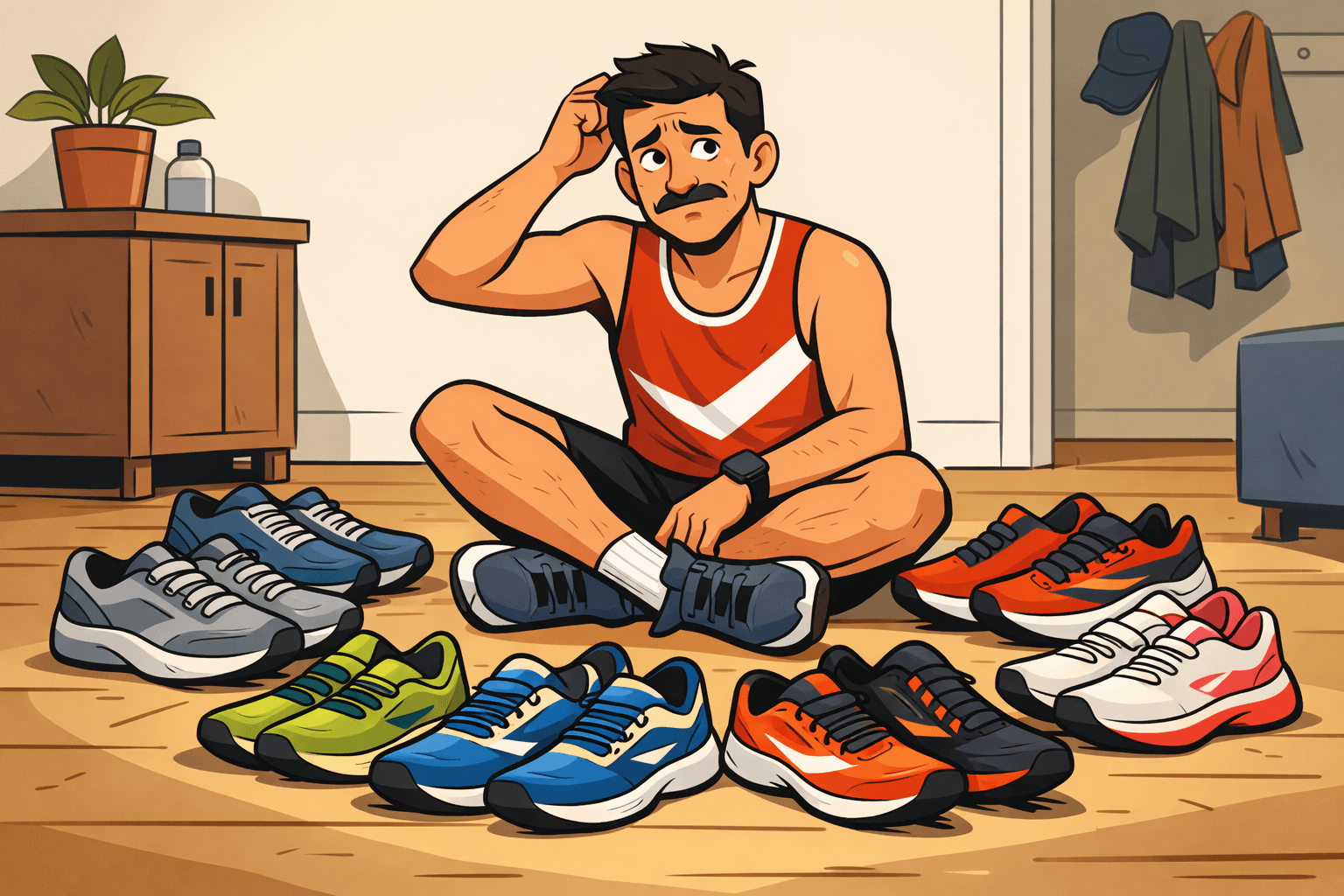
This question comes up constantly. Usually late at night with a credit card nearby. Usually framed as “I just want to avoid injury” while already eyeing a third colourway.
Right now, I rotate three pairs. Do I need three pairs? Absolutely not.
Why does the number of running shoes matter?
Running shoes are the most expensive variable most runners can easily change. They are also the easiest thing to blame when something hurts.
You can train badly for months, sleep six hours a night, eat like a raccoon, and still convince yourself that a new foam compound is the missing piece. Shoes feel active. They feel like progress. They are much more appealing than slowing down or going to bed earlier.
The reality is less dramatic. Shoes do not make you fast. They change how stress is distributed through your body. So instead of asking “how many shoes do I need?”, the better question is: how much variation does my body benefit from?
What running shoes actually change in your body
Every run is a negotiation between muscles, tendons, bones, and your tolerance for discomfort. Shoes influence that negotiation by deciding which tissues take the hit first and which ones get an easier day.
Different shoes change:
- how much impact force is absorbed by foam versus dumped straight into your feet and calves
- where stress shows up, whether that’s calves, Achilles, plantar fascia, quads, or a vague sense that everything feels “off”
- how stiff toe-off feels, which increases calf and foot workload even when pace stays the same
- how quickly muscles fatigue on longer or faster runs, which affects recovery more than race splits
Race shoes are stiff and springy and make it feel like you are flying. They also shift more work into your calves and feet, which means recovery can take longer than you expect. Daily trainers are softer and slower and feel dull by comparison, but they spread load more evenly and reduce strain, lowering your injury risk.
Why you only need one pair of shoes
You can run perfectly well in one pair of shoes, with one important caveat: it probably should not be a race shoe.
A single durable daily trainer can handle everything if:
- Your mileage is moderate
- Most runs are genuinely easy
- You are not doing frequent speed sessions
One pair works because it keeps things simple. There is less decision-making, less second-guessing, and fewer opportunities to blame the wrong thing when training feels hard.
Why you need two pairs of shoes
This is where I like to pretend to have landed. It’s also where I would actively recommend you land, even though I personally failed to stop here.
- one daily trainer
- one lighter, firmer shoe for speedwork and races
That’s it. That’s the sensible answer.
From a body mechanics point of view, rotating two shoes works because it changes where stress accumulates without you needing to think about it. Different foam densities, different stiffness, slightly different loading patterns. Same pace, less repetitive strain.
From a psychological point of view, it works because it stops you chasing dopamine. Speed shoes stay special. Easy runs are allowed to feel easy and a bit dull. You stop trying to feel “fast” on days that are not meant to be fast.
Why you need three pairs of shoes
No one needs three pairs of running shoes. Including me. And yet, this is where I’ve ended up.
A classic three-shoe setup looks like this:
- a daily trainer for easy mileage
- a lighter shoe for speedwork
- a race shoe that only comes out when something important is happening
During marathon training, this can make life more pleasant. Not faster. Not smarter. Just… nicer. Your legs get slightly different stresses, your race shoes don’t get trashed on Tuesday tempo runs, and mentally it helps compartmentalise the week.
But let’s be clear: three pairs is not a requirement. It is a luxury. It only makes sense once volume is high, workouts are frequent, and you already have the basics right. Sleep, fueling, pacing, strength work
The moment three pairs start existing because training feels hard, or because you’re trying to buy your way out of fatigue, you’ve crossed the line from problem-solving into retail therapy.
When shoe rotation goes off the rails
The goal is not to own the perfect shoe rotation. The goal is to run often enough that shoes stop being the main thing you think about. For most people, that means two pairs. One for easy running. One for faster days and races. That setup solves more problems than it creates. Three pairs can be fun during heavy training blocks. I say that as someone who has ended up there, but fun and necessary are not the same thing, and it’s worth knowing the difference before you start convincing yourself they are.
If your current shoes let you train consistently, recover properly, and stop blaming foam for decisions that were always going to hurt anyway, you’re doing it right. And if you still want another pair, fine. Just don’t pretend it’s a medical requirement.