What a marathon diet actually looks like
What marathon training actually looks like, from potato wedges and Haribo to eating crisps in the bath.


If you picture marathon runners eating like wellness influencers, you might be disappointed to hear that a marathon diet rarely includes smoothie bowls, macros laid out like a crime scene, or smug photos of salmon and quinoa taken from above.
Marathon training does not reward food purity. It rewards calories, digestion, salt, and whatever you can face eating again tomorrow. If you do it right, it can also be one of the more joyful parts of training.
The biggest misconception is that a runner’s diet is healthy. It can be, but during marathon training, it is far more accurate to say it is functional, repetitive, and occasionally unhinged in a very specific, earned way.
The idea that marathon runners eat “clean” is wildly optimistic
The moment training volume goes up, the idea of eating for virtue collapses. You are no longer eating to feel light or morally superior. You are eating to replace what you burned and to survive the next session without your legs crumbling.
Foods that are often labelled healthy are frequently a nightmare in marathon training - anything high in fibre or fat, or both (think nuts and seeds) is a no go when you’re marathon training, because they slow down your digestion. Slow digestion plus running is how you end up with mid-run stomach cramps and squatting down in a bush for a number two praying to the good lord that no one can see or hear you. Yes, it does happen to some people.
What actual pre long run food look like
My long runs have always been on Saturdays, which means Friday night is double dinner. Anything longer than a half marathon and my second dinner will be oven cooked potato wedges laced with salt.
If you are a salty sweater, which I very much am, marathon training demands a frankly irresponsible amount of sodium. You are losing it constantly through sweat, and replacing it makes a noticeable difference to how your legs feel and how functional you are the next day.
Toward the end of a training plan, when the long runs creep past 30k, my body needs around 500g of carbohydrates the day before just to function properly. Hitting the first 300g is easy enough by nudging carbs up at each meal, but that still leaves a stubborn gap. Closing it with “proper food” means eating close to a kilo of potatoes on top of everything else, which is where things start to feel less like fuelling and more like a personal challenge. Or, alternatively, you can eat 250g of Haribo and achieve the same thing with far more enthusiasm. I’ll let you guess which option I reach for most often.
When sugar is the best option
Sugar is one of the most efficient, low effort ways to get carbohydrates into a tired body. When you are fed up with rice and pasta, sugar becomes joyful fuel. Marathon training gives you a green light for a lot of sugar. Not because you are being naughty, but because you are repeatedly asking your body to do something quite unreasonable.
Yes, your dentist will tell you off. That is a separate issue.
The best part of marathon eating
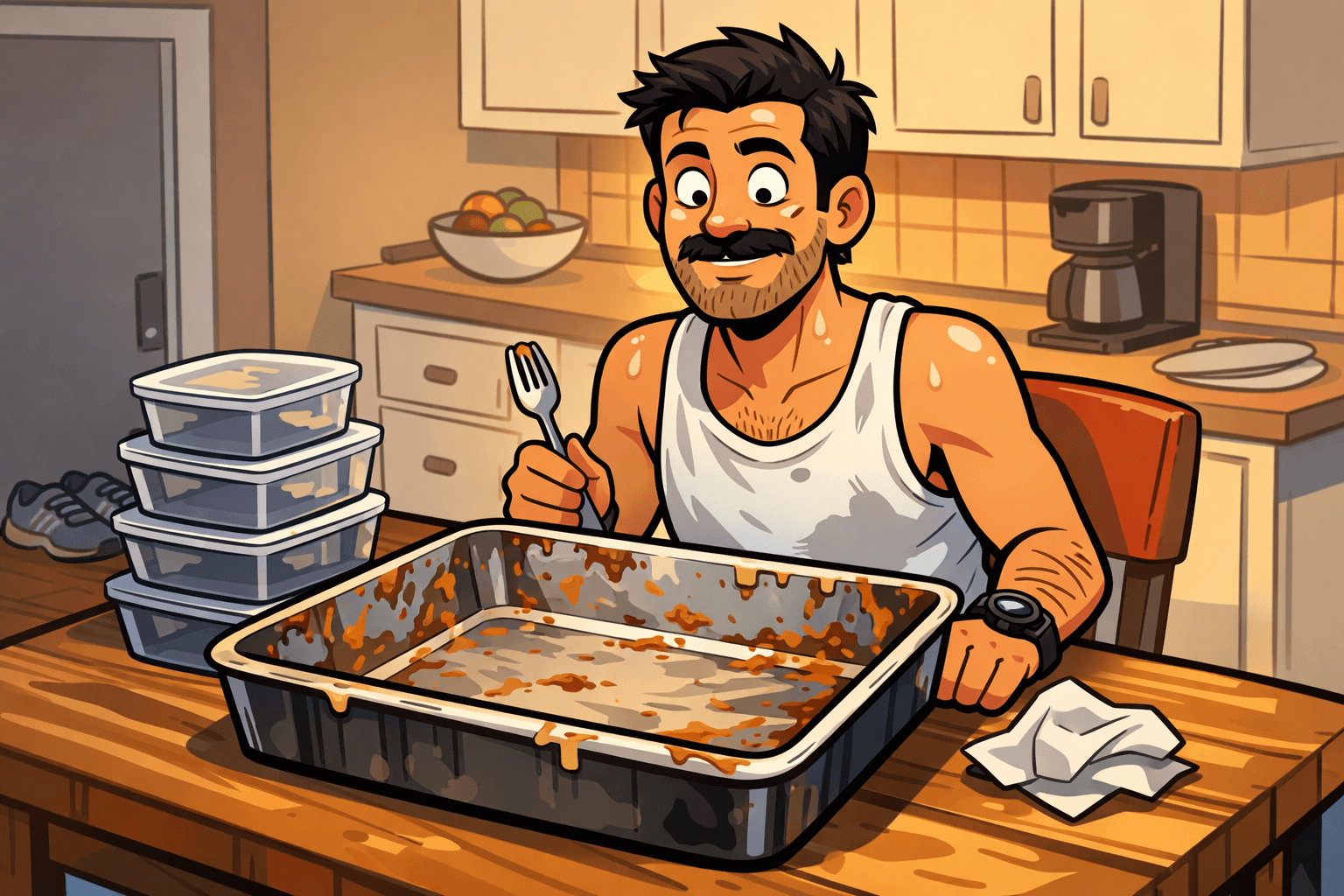
The most underrated food moment in marathon training is after a long run, when your appetite is technically zero but your body still needs energy. My post run ritual is a family size bag of crisps eaten in the bath. Ten out of ten. Just mindless eating with salty fingers while my legs slowly come back to life.
The trick with post-run eating is finding something that you like to eat mindlessly, and doing so in an enjoyable setting. Your appetite will hit the floor because your body is absolutely disgusted with what you’ve just done to it and for some reason it makes it shut down your basic functions like hunger.
This is not how you eat forever and that’s the point
A marathon diet is not a lifestyle template, it is a temporary solution to a very specific problem. You eat this way so you can train consistently, recover well enough, and make it to the start line without being chronically underfuelled and miserable. Once the training block ends, so does the need for this level of carbohydrate intake.
If your marathon diet looks repetitive, salty, sugary, and occasionally absurd, you are probably doing it right. If it also brings you a bit of joy along the way, even better. Vegetables will still be there when the race is over.