
How to run on your lunch break without stinking up the office
Fit a run, shower and lunch into your work break without returning to the office looking like you've recently been rescued from sea.

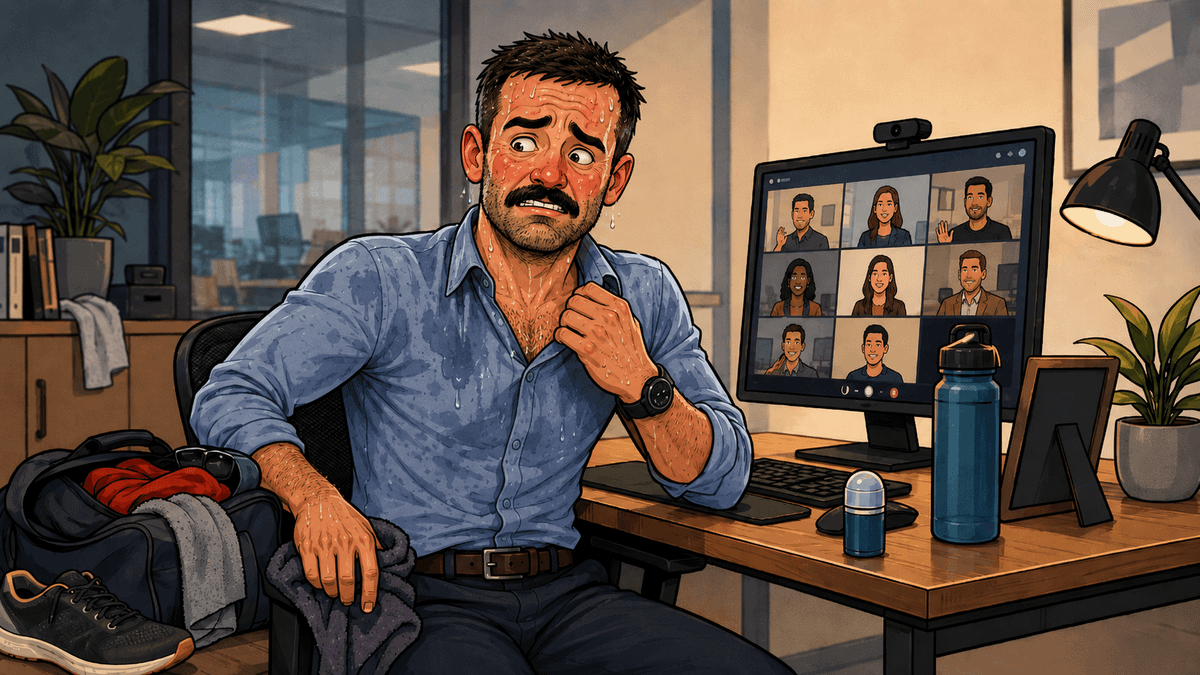
A one-hour lunch break should comfortably fit a 45-minute run. If you’ve ever tried it, you know that it absolutely does not.
A 45-minute run also requires getting changed, getting outside, warming up the joints you've spent all morning folding into an office chair, and waiting for Garmin to remember which planet you're on. And that’s before you even start running, let alone cooling down, showering, changing again and finding something resembling lunch.
Is a lunch break long enough for a run?
The first bit of unpleasant news is that your lunch break and your available running time are not the same thing.
If you've got 60 minutes, you might spend five getting changed and escaping the building, 30 to 40 actually running, another five or ten cooling down, then whatever remains frantically showering and putting clothes back on.
And that's fine.
If you're trying to fit training into an already busy schedule, shorter sessions are often exactly what makes the whole week possible.
How long can I run for on my lunch break?
The trick is planning the session around the time you actually have rather than trying to force the session you wish you had into a calendar that clearly disagrees.
With a 30-minute window, realistically, there’s not much chance of a run. I'd only seriously attempt it if I were already dressed for running or working from home. Otherwise you may get 15 or 20 minutes of actual movement before hygiene starts eating the rest of the clock.
With 45 minutes, you've got something useful. You could fit 25 to 30 minutes of easy running or a compact speed session if you're organised. Ten minutes easy, a block of short hard intervals with easy recoveries, then a short cool-down can fit surprisingly well. What you probably cannot fit is a grand track workout requiring a 20-minute warm-up, twelve repetitions, full recovery and a contemplative jog home.
With 60 minutes, you can usually get 30 to 45 minutes of running depending on how precious you are about hygiene.
Why do you keep sweating after you've stopped running?
This is where lunchtime running becomes particularly offensive. You finish the run and stop sweating quite so dramatically. You shower, dry yourself off and put on clean clothes.
Then your forehead starts leaking again. Excellent.
Your core temperature can remain elevated during recovery, and the systems controlling sweating and skin blood flow don't simply track that temperature in a perfectly neat way after exercise. Research into post-exercise thermoregulation shows that heat regulation is altered during recovery, which can leave body temperature elevated even while some of the normal heat-loss responses start returning towards baseline.
One experimental study found that average body temperature took around 28 minutes to return to its pre-exercise level, with considerable variation between people, and core temperature was still slightly elevated at that point.
That doesn't mean you need to sit naked beside your desk for half an hour awaiting thermal clearance.
How to cool down quickly after a run
Firstly: give yourself a few minutes immediately after the run to cool down. Walk the last section instead of sprinting heroically to the office door. If you're buying lunch, walking to grab it before you shower can actually be useful because you're cooling down while achieving something necessary.
Then you shower.
A cold shower might make you feel wonderfully alive and briefly convince you you've solved thermodynamics, but it doesn't teleport your entire body back to its resting state. External cooling can help with comfort and heat loss, but the broader recovery process still takes time. So if you're repeatedly showering and immediately sweating through the clean shirt you just put on, the solution may not be a more powerful antiperspirant. You may just need to finish running ten minutes earlier.
Do you actually need to shower after a lunch run?
I'm not going to pretend every lunchtime run requires a full Silkwood shower. Twenty easy minutes outside in January when you've barely broken a sweat is very different from smashing intervals through central London in August.
If you've had a genuinely sweaty run and there's a shower available, use it. You shouldn't need me to explain why. If you've barely sweated, a targeted clean-up may be enough. Face, armpits, whatever else needs attention, fresh deodorant and completely clean clothes can make a short easy run much less logistically demanding.
How do you manage the logistics of running from the office?
This was the bit that nearly required infrastructure investment when I was still commuting. I'd arrive carrying work clothes, running clothes, spare underwear, shoes, toiletries, lunch and snacks. Then I'd generate a second category of possessions during the day called “wet things I don't want touching any of the other things”.
If you run from an office regularly, leaving as much as possible there removes an extraordinary amount of faff. Toiletries can live in the locker. So can spare underwear, socks, a towel and possibly running shoes if you've got the space. Then you're not packing for a weekend break every single morning.
What should you do with your sweaty running kit in the office?
If you ball a sweaty vest and shorts into the bottom of a sealed bag at 1pm and reopen it at 7pm, you have effectively spent the afternoon conducting a bacterial flavour-development programme. If there's somewhere ventilated and socially acceptable to hang things, use it. Otherwise, you want to use a separate wet bag so at least it’s not touching your clean stuff.
Should you eat lunch before or after running?
The practical answer for most short lunchtime runs is: whatever your stomach tolerates and your diary permits. If you already know that eating a full meal immediately before running turns your intestines into an escape room, don't use Wednesday lunchtime to test whether they've developed emotionally. Have something small beforehand if necessary, run, then eat lunch afterwards.
The bigger lunchtime problem is simply arithmetic: you cannot fit a 40-minute run, ten-minute shower and a leisurely sit-down lunch into one hour unless your employer has adopted a spiritually generous interpretation of time.
Realistically, lunch is going to be eaten at your desk afterwards.
Does a lunchtime run make you useless for the afternoon?
There is evidence that physical activity during the working day can improve some aspects of mood, cognition and workplace functioning, although the research varies enormously in the type of exercise, duration and outcomes measured.
That doesn't mean a lunchtime run turns you into Bradley Cooper in Limitless, but stepping away from your desk to exercise is more likely to increase your productivity than the other way around, which is why it is also in your employer’s interest that you protect your training time.
Having said that, if your lunchtime run consistently leaves you so wrecked that you spend the next three hours staring blankly at a spreadsheet while eating emergency biscuits, the problem may not be lunchtime. The workout may just be too hard.
How to make lunchtime running actually stick
The biggest improvement is in removing the decision. If every lunchtime run starts with you sitting at your desk at 12:03 thinking: “Do I actually fancy running?”, then your lunch break has already begun disappearing.
Know what you're doing beforehand. Keep one or two routes you can run without navigating. You can close the laptop and execute rather than opening Google Maps and designing the Copenhagen Half Marathon.
Block the time in your calendar if meetings have a habit of reproducing into every visible white space.
The easier you make the transition from working to training, the less opportunity you give yourself to negotiate your way out of it. Your lunchtime running routine works when there are very few decisions between closing the laptop and starting Garmin.
Your lunch break is long enough, but not as long as you think
A one-hour lunch break can absolutely contain a useful run, it just cannot contain an hour of running.
The run might only be 30 minutes, but thirty minutes repeated consistently across a working week is useful training. You don't need to wait for the mythical evening where work finishes early, you're full of energy, dinner isn't waiting and absolutely nobody wants anything from you.
Use the time you've actually got.