
How to get enough protein at lunch
Finding a high-protein lunch shouldn't be this hard. Here's why 25g isn't always enough, and the lunches that actually work.

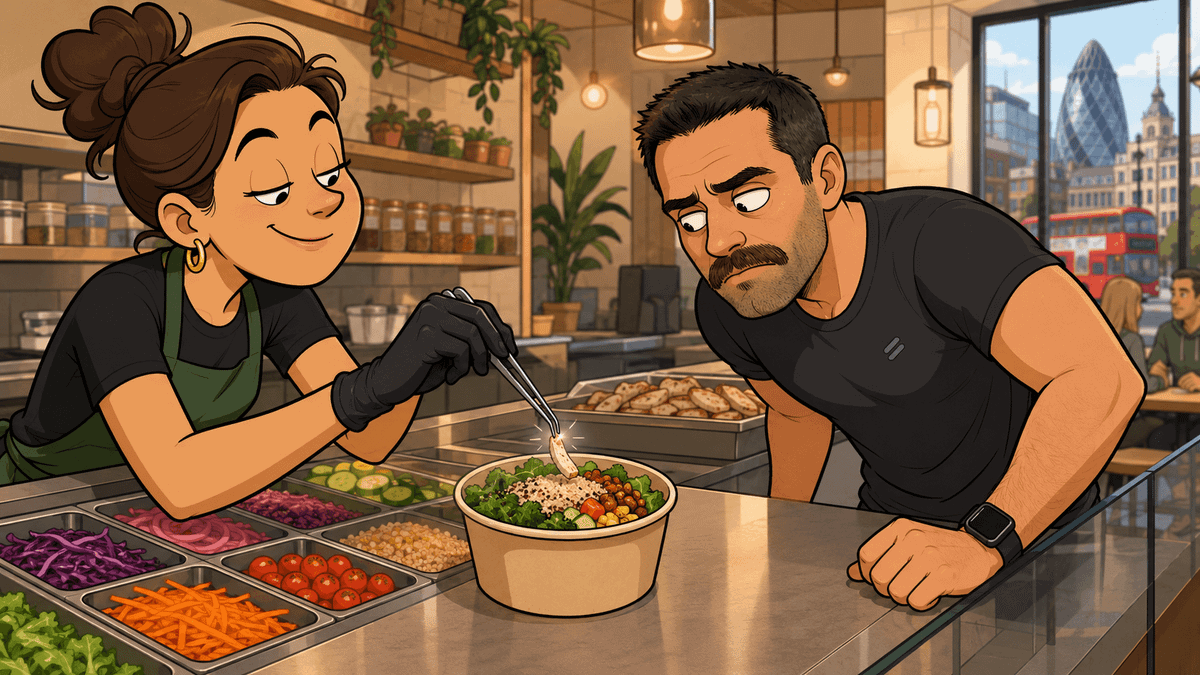
Everything is sold to us as protein. Protein yoghurt. Protein porridge. Protein cereal. Protein granola. Protein bars. Protein bread. Wander around a London supermarket at lunchtime and you'd be forgiven for thinking Britain had collectively developed a nutritional deficiency overnight.
Then you pick up a granola bar proudly declaring itself a "great source of protein", turn it over and discover that it contains 8g of protein and 350 calories.
Sure. The source might be great. There is indeed protein present. But if you're trying to eat 160g of protein a day, an 8g contribution costing you 350 calories is not going to get you very far.
This is the problem I keep running into when I have to buy lunch in London. There are "healthy" lunches everywhere. There are things described as high-protein everywhere. There are £10 salads containing a perfectly respectable 25g of protein everywhere.
But 25g just isn't that much when you're trying to hit 160g a day.
I could, of course, buy two salads. But for £20 I might as well go to a nice restaurant and have someone bring my lunch to me on a plate. So, after spending far too many lunchtimes turning over packets and muttering about chicken quantities, these are the solutions I've found.
How much protein do you need at lunch?
There is no lunchtime protein authority demanding a specific amount; it depends entirely on how you eat.
As a rough starting point, around 1.6-2.2g of protein per kilogram of body weight per day is a well supported target for people training regularly and trying to build or maintain muscle. Higher intakes can be appropriate depending on your training, calorie intake and goals, but 1.6g/kg is a sensible start.
If you eat three roughly equal meals, getting around a third of your protein at lunch makes sense. If breakfast is a coffee and fresh air, lunch and dinner will obviously need to do more. If you eat four meals and three snacks a day, each meal can do less. You can front-load it, back-load it or distribute it relatively evenly.
Take a smaller, active person eating around 1,500 calories and targeting 100g protein per day. That gives you a target of roughly 33g at lunch.
Now take me, an average-sized man eating around 2,500 calories and targeting at least 160g protein per day: a third is about 53g at lunch.
Is it true your body can only use around 20-30g of protein in one sitting?
No, your body doesn't throw protein gram 31 in the bin. Before we continue, we need to deal with one of the most persistent pieces of gym nutrition folklore: your body can absolutely use more protein in one sitting.
The idea isn't completely fabricated; older studies really did find that around 20g of protein appeared to maximise the short-term muscle protein synthesis response after exercise. The problem was, they only measured what happened for four hours.
A much more recent study decided to test what actually happens if you give people considerably more protein and then keep watching for considerably longer. Researchers compared 25g with 100g of protein after resistance exercise and followed the response for 12 hours.
The 100g dose produced a larger and longer anabolic response, with dietary amino acids continuing to be incorporated into muscle and other body proteins across the measurement period. Amino-acid oxidation barely increased. The larger meal simply took longer to digest and process.
So if you want to eat 100g of protein at dinner, you can. Whether your digestive system appreciates receiving half a chicken at 9pm is a separate matter.
How to actually get enough protein at lunch
The obvious answer for anyone with protein, kcal or any other nutritional targets is: make your own lunchbox. But we all know that sometimes, life gets in the way. Or maybe we don’t like cooking.
The other option to making your own lunchbox, is buying ready-made ingredients from a supermarket and assembling your own lunchbox. Cooked chicken is easy to come by, add a bag of leaves and some sort of dressing and you’ve got yourself a basic, protein rich lunch. It won’t be thrilling, so I hope you’ve got solid dinner plans.
Finally, there’s the option to go out and buy your lunch. This is entirely based on living in London, where there are tons of lunch places serving poke bowls, rice bowls and salad bowls that all claim to be high in protein or “a good protein source”. I have not tried all of them or researched every single corner of London’s lunch bowl scene, but the general rule is: don’t trust their marketing, you have to look at the nutritional information. The majority of them will give you a generous serving of rice, or pasta, or whatever carb they’ve got, and then carefully position exactly two prawns on top. Sure it might look and sound “healthy”, but it is hardly making a dent on your protein goals. In my experience as a medium-sized man, only one place serves genuinely high protein lunch boxes:
The Salad Project
After years of salads where the chicken appears to have been applied with tweezers, The Salad Project’s protein bowls are genuinely high in protein, genuinely substantial and they taste fantastic.
Depending on what you order, you're getting the sort of protein numbers that can genuinely take care of a large chunk of a 160g day. The Chicken Satay Protein Bowl, for example, contains around 74g of protein.This is the only grab-and-go lunch I've found in London that consistently solves the protein problem without requiring me to supplement my lunch with a second lunch.
A good high-protein lunch for me doesn’t mean it’s good for you
We all have different nutritional needs, preferences and goals, and blindly following someone else’s diet isn’t going to solve whatever you are trying to solve for yourself.
A salad containing 25g of protein isn't pretending to be something it isn't. 25g is a meaningful amount of protein, and it might be exactly the right amount for you.
The problem is that high protein is not a useful enough description on its own. A smaller person targeting 100g per day and a larger person targeting 160g are going to get wildly different outcomes from exactly the same lunch.
The same goes for protein bars, wraps, grain bowls and yoghurt pots. Whether the marketing department considers something "high protein" is less interesting than the tiny numbers on the back that tell you whether it's actually useful to you.